
Large Cottage Solar Kit Install in Radium, BC
Project Overview
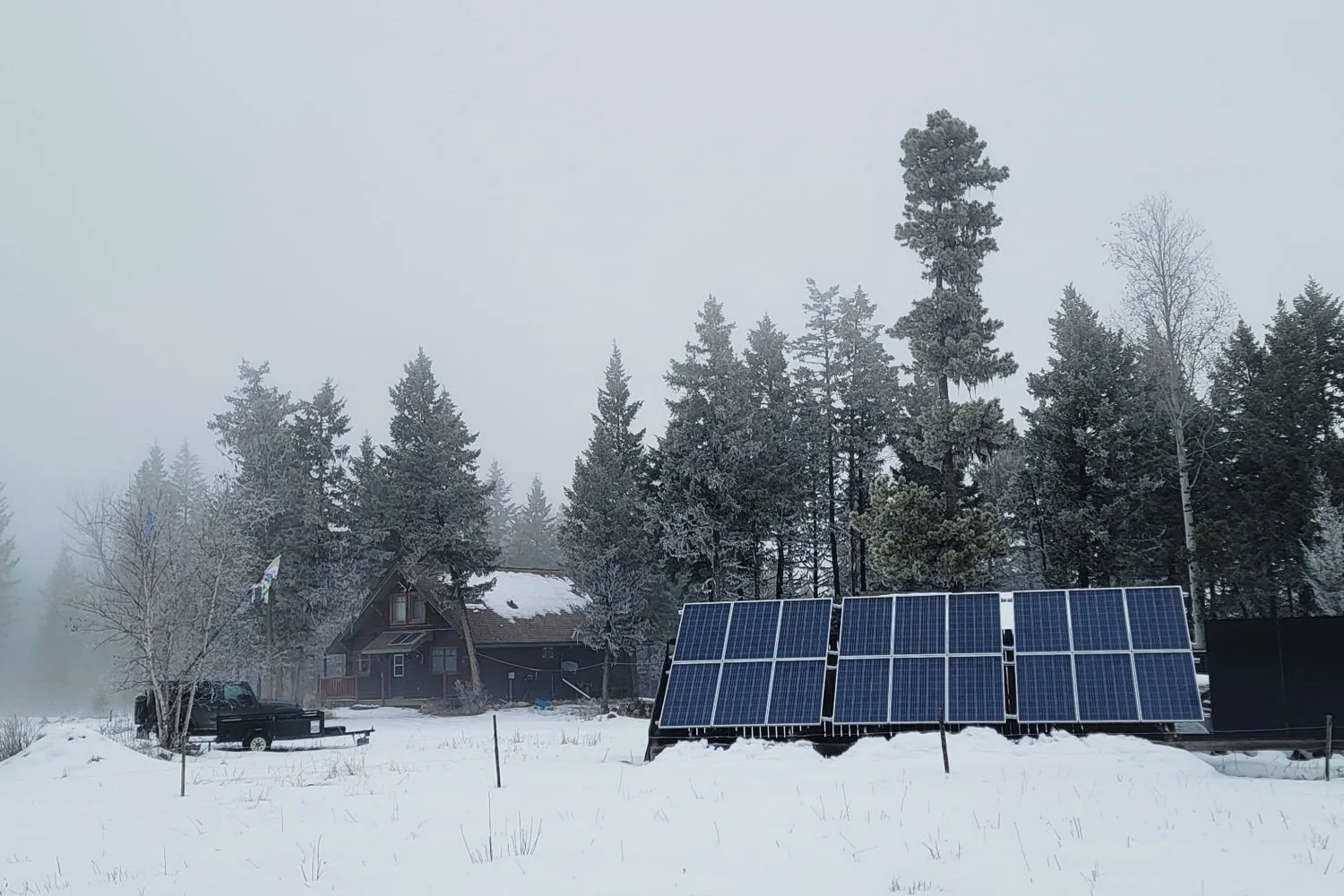
This 16-panel, ground-mounted solar system was installed in Radium, British Columbia in 2016. The array is mounted on a custom-built wooden base with standard aluminum racking. The system feeds into an off-grid inverter/charger that can be powered by solar or supplemented with a gas/diesel generator when required.
The 48V battery bank supplies power to the entire property — including the main cabin, guest cabin, garage, and shed. Critical loads include the well system, kitchen appliances, communications, and entertainment equipment. This system provides full-property independence in a truly remote location.
How the System Works
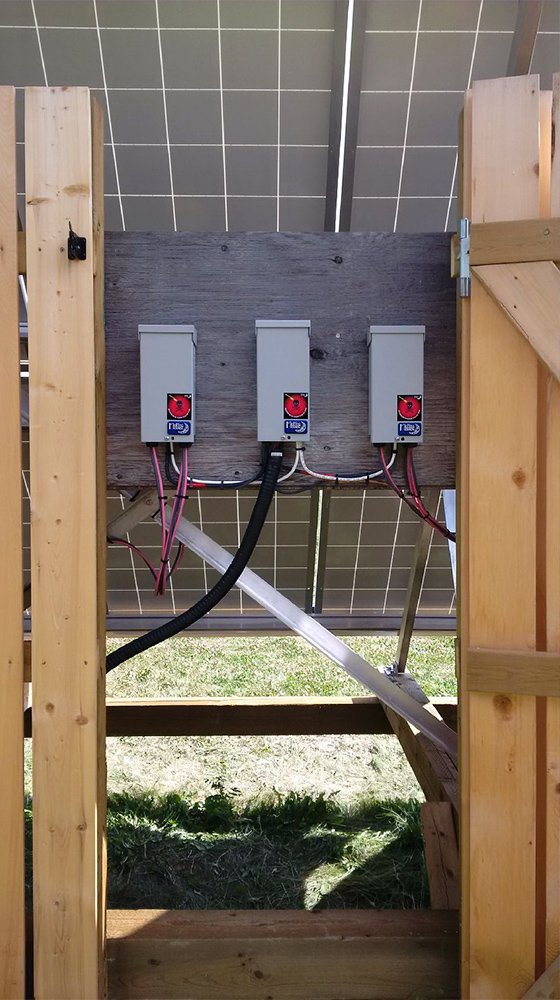
The array consists of 6 strings of 3 panels each. These strings feed into a combiner breaker panel and are consolidated into a single cable that runs approximately 100 feet from the array to the cottage basement.
From there, power flows through:
A main DC disconnect
The charge controller
The 48V battery bank
The inverter
The property’s main breaker panel
While the system includes appropriate fuses and disconnects throughout, the simplified overview above highlights the core functionality.
The owners take daily power readings while onsite. Understanding your system’s production and consumption is key to protecting battery life and avoiding over-discharge. When away, appliances are turned off and unplugged to preserve stored energy. Heating is provided by wood stove, and in the summer, cooling needs are minimal, with fans used at night.
The Story Behind the Upgrade
The cabin sits on 150 acres of mountainous forest, with no utility power available for many kilometers.
When the family purchased the property, it came with just two small solar panels and two aging car batteries. The wiring was described as unsafe, and the system could only power a few LED lights. An upgrade wasn’t optional — it was essential.
This family of four uses the cabin as a home away from home. Reliable power was necessary not just for comfort, but to allow them to stay connected and work remotely. Running a generator full-time during construction and daily use quickly became exhausting.
As the owner put it:
“I was tired of being a slave to my generator.”
After reviewing several system-sizing options, we finalized a design tailored to their needs. I provided detailed spec sheets for the panels and racking so the owner could prepare the wooden platform in advance. Once the equipment arrived, the owner and his family erected the racking, mounted the panels, and completed the installation in roughly one full day.
Ten years later, the system is still performing exactly as designed.
Technology Evolution & Battery Upgrade
After a decade of reliable service, the original lead-acid batteries are ready for replacement. Battery technology has advanced significantly, and the owners are now upgrading to lithium for several key benefits:
Lighter weight
Built-in monitoring systems
Greater usable depth of discharge (allowing a smaller bank)
No maintenance requirements
No off gassing
Importantly, the rest of the system does not require upgrading. The panels, inverter, and infrastructure were designed for long-term performance. This demonstrates the value of installing high-quality equipment from the start.
Why This Matters for You
When properly designed, an off-grid solar system can provide reliable, long-term independence without constant upgrades. Planning for future growth means you can always expand by adding panels if needed.
At IES, we focus on building systems that are designed to last — not systems that need to be replaced every few years.
This family is thrilled with their setup and will continue enjoying their remote cabin lifestyle for decades to come.
If you’re considering an off-grid system for your property, I’d be happy to discuss options tailored to your needs.
Thank you,
Woody Nickerson